
Should I Medicate My Child? What ADHD Parents Need to Know Before Deciding
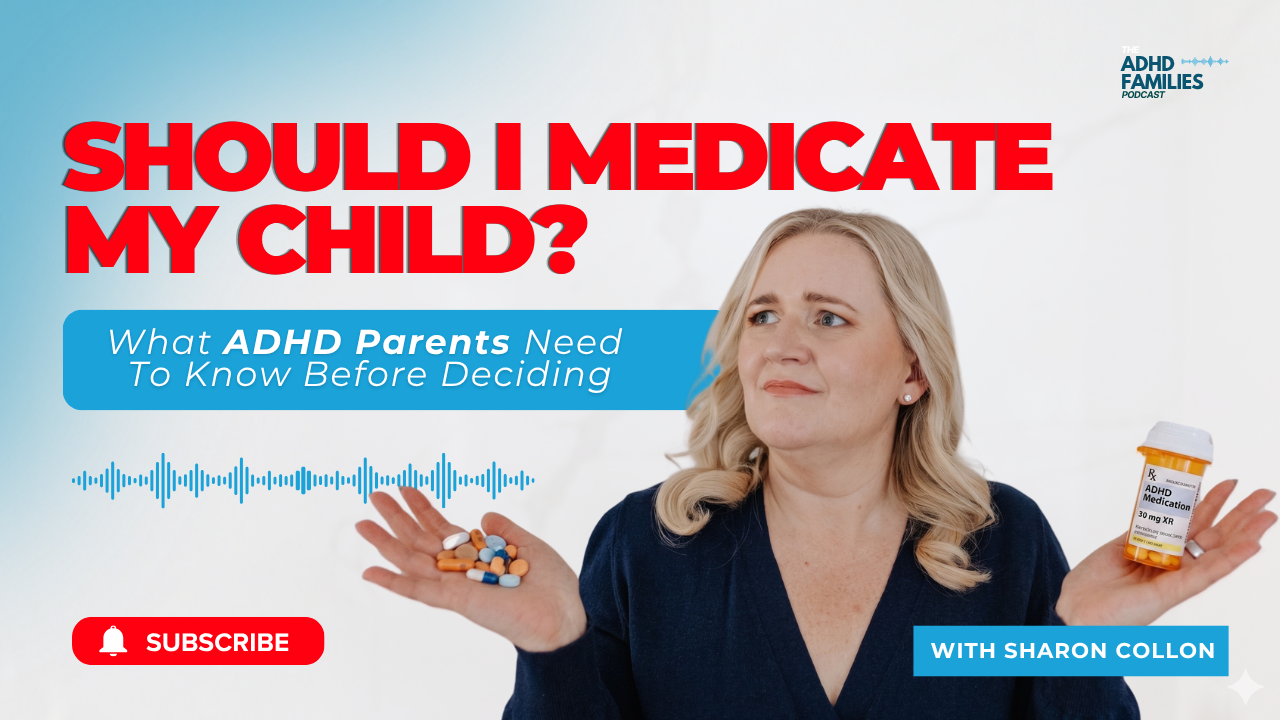
If you’re parenting a child with ADHD, this question doesn’t just sit in the background. It follows you into the quiet moments. It shows up at 2am. It sits underneath school emails, meltdowns, and the constant second-guessing.
Should I medicate my child?
Am I helping… or harming?
What if I get this wrong?
This isn’t a light decision. It’s layered, emotional, and often made harder by loud opinions and incomplete information. So instead of adding more noise, let’s slow this down and look at what actually matters.
The pressure parents are under
Most parents I speak to are not short on information. They are drowning in it.
What they’re missing is clarity.
Because they’re trying to make a complex decision while:
- Managing daily ADHD challenges
- Holding together school expectations
- Navigating family opinions
- Carrying the emotional weight of it all
And then, on top of that, advice comes from everywhere. Often from people who have never lived this reality.
I’ve had parents tell me they’ve received confident medication advice from strangers, relatives, even casual acquaintances. Everyone has an opinion. Very few have context.
This decision deserves more than opinions. It deserves space, accurate information, and the right questions.
What ADHD medication actually does
Before deciding anything, we need to clear up a big misunderstanding.
ADHD is not a behaviour issue. It’s a neurodevelopmental difference.
The ADHD brain has lower levels of dopamine and norepinephrine. These are the chemicals responsible for:
- Attention
- Impulse control
- Emotional regulation
- Working memory
Medication works by increasing the availability of these neurotransmitters.
It is not about sedating a child.
It is not about changing who they are.
When medication is working well, it allows a child to access skills that were already there but harder to reach.
That distinction matters.
What the research actually says
Let’s move away from myths and look at evidence.
The MTA Study
One of the largest ADHD studies ever conducted found that medication was more effective than behavioural therapy alone for reducing core symptoms.
But here’s the part that often gets missed:
The best outcomes came from combining medication with behavioural support.
Not one or the other. Both.
Effectiveness rates
Large-scale research shows stimulant medication is effective for around 70 to 80 percent of children with ADHD.
That also means:
- Some children don’t respond well
- Some respond better to different types
- Finding the right fit takes time
This is not a one-size-fits-all decision.
Brain development and timing
Emerging research suggests that children who begin medication earlier may show measurable changes in brain development, particularly in areas responsible for executive function.
This doesn’t mean earlier is always better.
But it does mean timing is worth considering, not avoiding.
Long-term outcomes
Long-term studies show that well-managed ADHD medication is associated with:
- Better academic outcomes
- Improved emotional wellbeing
- Reduced risk-taking behaviours
- Lower rates of substance misuse
This challenges one of the most persistent fears parents carry.
Side effects
This is the part parents worry about most, and rightly so.
Common side effects include:
- Reduced appetite
- Sleep challenges
- Headaches or stomach aches
In many cases, these are manageable and often linked to dosage.
The key is not ignoring side effects.
It’s weighing them against the impact of untreated ADHD.
Five questions to ask before you decide
Instead of trying to answer everything at once, start here.
1. How much is ADHD impacting my child right now?
Is your child struggling:
- Academically?
- Socially?
- Emotionally?
- At home?
Severity matters. Context matters.
2. What supports are already in place?
Medication is not a replacement for:
- Structure
- Routines
- School support
- Parenting strategies
These are foundational.
And when combined with medication, they tend to work better.
3. Have we actually trialled medication properly?
A trial is not a commitment.
It’s data.
With the right medical support, a trial gives you real insight into how your child responds. That’s information you cannot get from thinking alone.
4. Am I deciding based on fear or on need?
This one is uncomfortable, but important.
Sometimes the resistance to medication is about what it means to us:
- Fear of judgement
- Fear of getting it wrong
- Fear of what it says about our parenting
But the real question is:
What does your child need right now?
5. Do I have the right medical support?
The right professional will:
- Listen
- Explain
- Adjust thoughtfully
- Treat you as part of the process
If you don’t feel supported, you are allowed to find someone who does this properly.
The part research doesn’t cover
Medication is not always forever.
In my own family, medication was a support for a season. It helped create access:
- To learning
- To confidence
- To connection
Later, it was no longer needed in the same way.
That’s something many parents don’t hear enough.
This decision is not about locking in a lifelong path.
It’s about responding to what your child needs now.
Resources Mentioned
- ADHD Families Podcast Episode 77
- Multimodal Treatment Study of ADHD (MTA Study)
- Australian ADHD Clinical Practice Guidelines
- Lancet Psychiatry ADHD medication review
- JAMA Psychiatry long-term ADHD outcomes research
Call to Action
If you’re navigating this decision right now, don’t do it in isolation.
Start by building the foundations that support your child, regardless of whether medication is part of the plan.
🎥 Watch the full episode on YouTube
🎧 Listen on The ADHD Families Podcast
🎁 Grab the free guide: 5 Ways to Navigate Big Emotions Without Power Struggles
💻 More resources at thefunctionalfamily.com
About / Work With Me
Sharon Collon is a PCC credentialed ADHD family coach and founder of The Functional Family.
She works with parents who are tired of reacting and ready to build systems that actually support their child and their home.
Her approach is practical, grounded, and designed for real life. Not theory.
Learn more, access resources, or explore working together at:
thefunctionalfamily.com
Join our free ADHD support group
Your tribe is here waiting for you. Join us now.
Want support? Join our Free Community for families navigating ADHD
Recent Posts

Book a FREE 15 min discovery call with Sharon
Sharon is an award winning credentialed ADHD coach and parenting consultant who is specifically trained to work with families navigating ADHD. She is passionate about creating ADHD-friendly systems to make family life easier with ADHD. Find out how she can help you and/or your family.
🎥 Loved this post?
Catch the full conversation on YouTube!
We dive deeper into this topic in the latest podcast episode—real talk, practical tips, and plenty of “oh wow” moments.
Don’t forget to like & subscribe!
